Wisdom Teeth Removal in Encino, CA
Wisdom teeth removal is an oral surgery procedure used to treat or prevent problems involving the third molars at the back of the mouth. At their Encino oral surgery practice, Dr. George A. Maranon and Dr. Shahe Dishakjian, also known as Dr. D, evaluate and remove impacted, partially erupted, infected, or otherwise problematic wisdom teeth.
Quick Answer: Wisdom Teeth Removal in Encino, CA
Wisdom teeth are the final permanent teeth to develop at the back of the mouth. Removal may be recommended when they are impacted, painful, infected, difficult to clean, damaging neighboring teeth, or associated with another oral health concern. Dr. Maranon or Dr. Dishakjian will use an examination and diagnostic imaging to determine whether removal is appropriate and which anesthesia option may be suitable.
What Are Wisdom Teeth?
Wisdom teeth, also called third molars, are the last permanent teeth located at the back of the upper and lower jaws. They commonly develop during adolescence and may begin erupting during the late teenage years or early adulthood.
Some people have sufficient room for their wisdom teeth to erupt into healthy, functional positions. Others develop wisdom teeth that remain trapped beneath the gums or jawbone, emerge at an angle, or only partially erupt. These teeth are described as impacted wisdom teeth.
Wisdom teeth do not automatically require removal. Their position, development, effect on surrounding structures, symptoms, and potential to cause future problems must be evaluated before treatment is recommended.
What Is an Impacted Wisdom Tooth?
An impacted wisdom tooth is unable to erupt completely into a normal position. Impaction can occur because there is insufficient room in the jaw, another tooth blocks the eruption path, or the wisdom tooth develops at an unfavorable angle.
Common forms of impaction include:
- Soft-tissue impaction: The tooth has emerged through the bone but remains partially or completely covered by gum tissue.
- Partial-bony impaction: Part of the tooth remains enclosed within the jawbone.
- Complete-bony impaction: The tooth remains completely surrounded by jawbone.
- Angular impaction: The tooth develops toward the second molar, toward the back of the mouth, or in another abnormal direction.
The type and position of an impaction can affect the complexity of removal and the surrounding anatomical structures that must be considered during treatment planning.
What Are the Signs of Problematic Wisdom Teeth?
Impacted or partially erupted wisdom teeth do not always cause immediate symptoms. When symptoms develop, they may include:
- Pain or pressure near the back of the mouth
- Swollen, tender, or bleeding gum tissue
- Jaw soreness or stiffness
- Difficulty opening the mouth comfortably
- Persistent bad breath or an unpleasant taste
- Food becoming trapped around a partially erupted tooth
- Swelling around the jaw or side of the face
- Repeated infection around the wisdom tooth
- Decay affecting the wisdom tooth or adjacent molar
Contact the office if you experience significant pain, facial swelling, fever, drainage, difficulty swallowing, or another concerning symptom. Call 818-990-5500 to speak with the team.
If Your Wisdom Teeth Do Not Have Room to Grow, They May Need to Be Removed
Schedule a consultation to have your wisdom teeth evaluated by one of our Encino oral surgeons.
Why Remove Them? | Evaluation | Removal Process | Anesthesia | Recovery | FAQs
Why Are Wisdom Teeth Removed?
Wisdom teeth may require removal when they cannot erupt into healthy, functional positions or when they threaten the health of surrounding teeth and tissues. An impacted tooth may remain completely beneath the gum and bone, partially emerge through the gum, or grow toward a neighboring tooth.
Wisdom teeth removal may be recommended when the teeth contribute to or present a significant risk of:
- Pain or pressure: An impacted tooth can cause discomfort near the back of the jaw.
- Gum infection: A partially erupted tooth can create an opening where bacteria and food accumulate.
- Tooth decay: Wisdom teeth may be difficult to brush and floss adequately because of their location.
- Damage to neighboring teeth: An angled tooth may place pressure against the second molar or make the area difficult to clean.
- Gum or bone loss: Chronic inflammation can affect the supporting structures around the wisdom tooth and neighboring molar.
- Cysts or tumors: In some cases, an abnormal growth may develop around an impacted tooth.
- Orthodontic or surgical needs: Removal may be recommended as part of a broader dental or jaw-treatment plan.
Wisdom teeth that are healthy, completely erupted, functional, painless, free of decay, surrounded by healthy gum tissue, and easy to clean may not require removal. Retained wisdom teeth should continue to be monitored with clinical examinations and diagnostic imaging.
Learn more about why wisdom teeth may require extraction.
When Should Wisdom Teeth Be Evaluated?
Wisdom teeth are commonly evaluated during the teenage years, when diagnostic imaging can show their position, eruption path, and stage of root development. An early evaluation does not necessarily mean that immediate removal will be recommended. It provides an opportunity to identify concerns and monitor development.
You should also consider an evaluation if you experience pain, swelling, repeated infection, difficulty cleaning the area, or another change involving the teeth at the back of your mouth.
Although wisdom teeth are frequently removed during the late teenage years or early adulthood, there is no single correct age for every patient. Treatment timing depends on tooth development, position, symptoms, surrounding anatomy, health history, and other individual factors.
Additional information is available on the page explaining when wisdom teeth should be removed.
What Happens During a Wisdom-Teeth Consultation?
During your consultation, Dr. Maranon or Dr. Dishakjian will review your medical, dental, and orthodontic history, discuss your symptoms, and examine your mouth. X-rays or other diagnostic images may be used to evaluate:
- The number, position, and angle of the wisdom teeth
- Whether the teeth are fully or partially impacted
- The development and shape of the tooth roots
- The proximity of the roots to nerves and sinuses
- The condition of neighboring teeth and supporting bone
- Signs of infection, decay, cyst formation, or other pathology
- The anticipated complexity of removal
After reviewing these findings, your surgeon will explain whether removal or continued monitoring is recommended. The consultation also provides an opportunity to discuss the procedure, anesthesia options, potential risks, recovery, fees, and insurance benefits.
Review the detailed guide explaining what to expect at a wisdom-teeth consultation.
What Happens During Wisdom Teeth Removal?
The surgical process depends on the position and development of each tooth. A fully erupted wisdom tooth may be removed similarly to another dental extraction. An impacted tooth may require an incision in the gum tissue and the removal of a limited amount of surrounding bone.
When appropriate, the tooth may be divided into smaller sections so it can be removed through a smaller opening. The surgical sites are cleaned, and sutures may be placed to support healing.
Gauze is positioned over the extraction sites to help control bleeding and encourage blood-clot formation. Patients remain under supervision until the surgical team determines that they are ready to leave the office with their responsible adult escort.
Visit the wisdom teeth removal process page for additional information about surgery.
What Anesthesia Is Used for Wisdom Teeth Removal?
Wisdom teeth may be removed using local anesthesia, IV sedation, general anesthesia, or an appropriate combination of techniques. Local anesthesia is used to numb the surgical area even when sedation or general anesthesia is also provided.
The recommended option depends on the number and position of the teeth, the anticipated complexity of surgery, the patient’s health history, and individual comfort needs. Your surgeon will explain the available options during the consultation.
Patients receiving sedation or general anesthesia must follow all instructions concerning eating, drinking, medications, transportation, and adult supervision. A responsible adult must drive the patient home and follow the supervision instructions provided by the office.
What Should I Expect After Wisdom Teeth Removal?
Temporary bleeding, swelling, soreness, bruising, and jaw stiffness can occur after wisdom teeth removal. These effects generally improve as healing progresses, although every patient and procedure is different.
Early recovery commonly involves:
- Resting and limiting strenuous activity
- Keeping gauze in place as directed
- Using cold packs according to the postoperative instructions
- Eating soft foods and drinking adequate fluids
- Taking medications only as prescribed or directed
- Avoiding smoking, vaping, straws, and actions that may disturb the blood clots
- Keeping the mouth clean according to the surgical team’s directions
Follow the personalized instructions given to you by Dr. Maranon or Dr. Dishakjian. Contact the office if you experience worsening pain, uncontrolled bleeding, fever, difficulty breathing or swallowing, persistent numbness, or another unexpected concern.
Review the complete postoperative instructions for wisdom teeth removal before your procedure.
What Are the Possible Risks of Wisdom Teeth Removal?
As with any surgical procedure, wisdom teeth removal involves potential risks. These may include bleeding, swelling, infection, dry socket, delayed healing, injury to a neighboring tooth, sinus complications, and temporary or persistent changes in sensation associated with a nearby nerve.
Individual risk depends on factors such as tooth position, root development, surrounding anatomy, overall health, medications, and tobacco use. Your surgeon will review the risks relevant to your particular case before treatment.
What Is Dry Socket?
Dry socket occurs when the protective blood clot at an extraction site is lost, dissolves prematurely, or does not develop properly. It can expose the underlying bone and cause significant pain several days after surgery.
Smoking, vaping, drinking through straws, vigorous rinsing, and disturbing the surgical area can increase the risk. Contact the office if pain becomes more severe instead of gradually improving.
Why Choose an Oral and Maxillofacial Surgeon?
Oral and maxillofacial surgeons complete hospital-based surgical and anesthesia training focused on conditions involving the teeth, mouth, jaws, and facial structures. This includes the evaluation and removal of erupted and impacted wisdom teeth and the management of related complications.
Dr. Maranon and Dr. Dishakjian provide wisdom teeth removal using individualized surgical planning and anesthesia options. Their Encino office is equipped for outpatient oral surgery and patient monitoring.
Frequently Asked Questions About Wisdom Teeth
Does everyone need to have their wisdom teeth removed?
No. Wisdom teeth that are healthy, properly positioned, functional, and easy to clean may not require removal. However, retained wisdom teeth should continue to be monitored because their condition can change.
Can impacted wisdom teeth cause problems without hurting?
Yes. An impacted wisdom tooth may contribute to decay, gum disease, damage to a neighboring tooth, bone loss, or cyst formation without initially causing noticeable pain. Diagnostic imaging can identify concerns that are not visible during a routine examination.
Can all four wisdom teeth be removed during one appointment?
Yes, all four wisdom teeth are frequently removed during one procedure when clinically appropriate. The treatment plan depends on how many wisdom teeth are present, their positions, the patient’s health, and the anticipated complexity of removal.
How long does wisdom teeth recovery take?
Recovery varies according to the number and position of the teeth, the complexity of surgery, and the patient’s healing response. Swelling and discomfort are commonly most noticeable during the first several days and then gradually improve.
When can I return to school, work, or exercise?
Many patients plan to rest for several days. More strenuous work, exercise, or athletic activity may require additional recovery time. Follow the individualized activity instructions provided by your surgeon.
Can I drive myself home after surgery?
You cannot drive yourself home if you receive IV sedation or general anesthesia. A responsible adult must accompany you, drive you home, and follow the postoperative supervision instructions provided by the practice.
What can I eat after wisdom teeth removal?
Patients generally begin with liquids and soft foods that require minimal chewing. Avoid foods that are hard, sharp, excessively hot, or likely to become trapped in the surgical sites. Follow the practice’s specific diet instructions after oral surgery.
How much does wisdom teeth removal cost?
The cost depends on the number and position of the teeth, the complexity of removal, the anesthesia selected, and applicable insurance benefits. Following the examination and review of the necessary imaging, the treatment coordinator can provide an individualized estimate.
Learn More About Wisdom Teeth Removal
Explore these related resources to learn more about wisdom teeth evaluation, surgery, and recovery:
- Why Wisdom Teeth May Need to Be Removed
- When Wisdom Teeth Should Be Removed
- What to Expect at Your Consultation
- What to Expect During Wisdom Teeth Surgery
- Instructions After Wisdom Teeth Removal
- Wisdom Teeth Recovery FAQs
Schedule a Wisdom Teeth Consultation in Encino, California
If you or your teenager has wisdom-teeth pain, swelling, impaction, or another concern, schedule an evaluation with Dr. George Maranon or Dr. Shahe Dishakjian at their Encino oral surgery office.
The practice serves patients from Encino, Sherman Oaks, Tarzana, Studio City, Woodland Hills, Van Nuys, Northridge, Reseda, and communities throughout the San Fernando Valley.
Call 818-990-5500 or request an appointment with the oral surgery team.
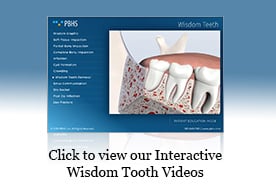
Wisdom Teeth Presentation
To provide you with a better understanding of wisdom teeth, we have provided the following multimedia presentation. Many common questions pertaining to wisdom teeth are discussed.